
Talking to Catarina Mina: In Brazil’s Hands
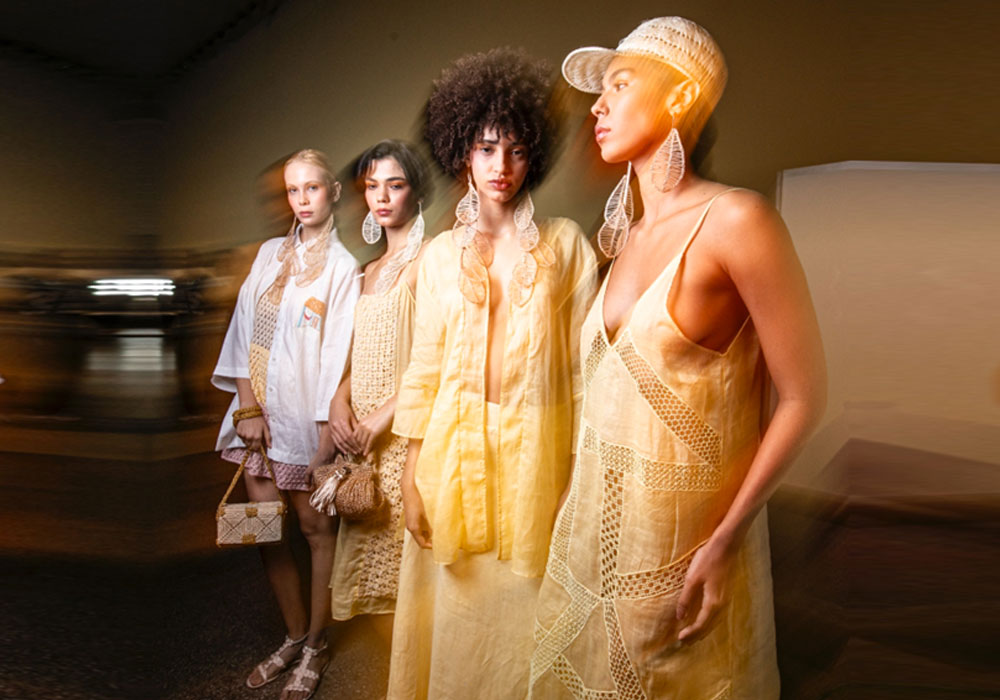
Talking about Brazilian handmade is diving into a world of research, discovery, logistics, and of course, expertise in working with raw materials sustainably. That’s the challenge taken on by Catarina Mina, a brand founded by Celina Issa in 2014 and first “imagined” back in 2005, during her college years.
To talk about Catarina Mina is to understand just how memorably Brazilian its pieces are. The color choices, the craftsmanship, the textures, and the rhythm — something only a tropical brand can achieve. But this is fashion, and that means it’s not just about how things are made — it’s about staying connected to what people love today. The designer shared with our website a bit of the brand’s journey, which started with bags and accessories and now includes clothing and home collections.
Today, Catarina Mina sells primarily through its national and global e-shop, in national multi-brand stores, and in three physical stores in Brazil: two in São Paulo and one in Fortaleza. The brand exports to 17 countries, with plans to expand even more — always staying true to its sustainable ethos and Brazilian essence.
You recently participated in the Brazilian Creating for Tomorrow exhibition in London. How did that come about? What was the audience’s reaction, from your perspective?
We received the invitation with great joy, and it immediately activated a strong sense of responsibility in us. We were recently certified by the B Corporation (Sistema B), and it’s amazing how much an international recognition of this caliber pushes us to dream even bigger and aim higher in the market of impact-driven fashion.
Being in London for BCFT was hugely important. The event is part of Climate Week, which aligns perfectly with our mission: to seek solutions for the future and do our part on that journey. We exhibited pieces made with Amazonian rubber, which symbolizes us reaching new frontiers — far from our place of origin in Ceará. Straight from the lungs of the world, latex is one of the raw materials we’ve been exploring deeply.
We felt that the audience was proud to see that Brazil fosters initiatives like this — making the most of our rich diversity in climate, people, and talent to try and build a more sustainable future.
Have you participated in international trade shows? Which ones? Tell us about your experiences. Have you ever worked on a project with support from Abest/Apex (FLB)? How was that?
Yes! We debuted in international fairs back in 2016. We’ve attended Who’s Next in Paris multiple times, Cabana in Miami and New York, Coterie, Première Classe, and Splash.
Could you talk about your experience doing fashion shows? What do you think of it as a communication tool?
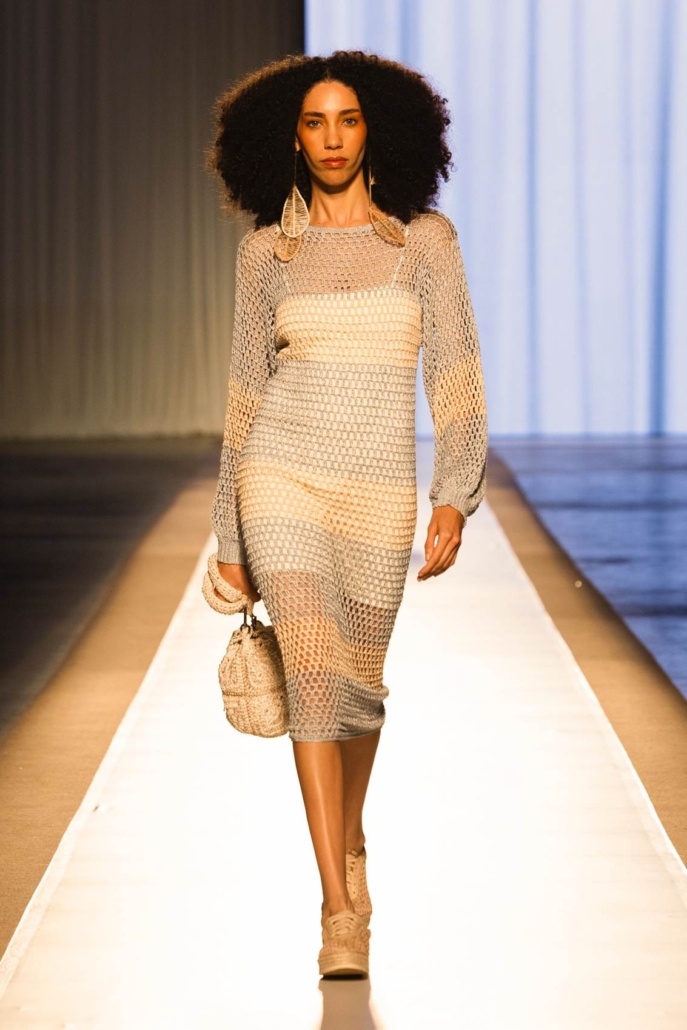
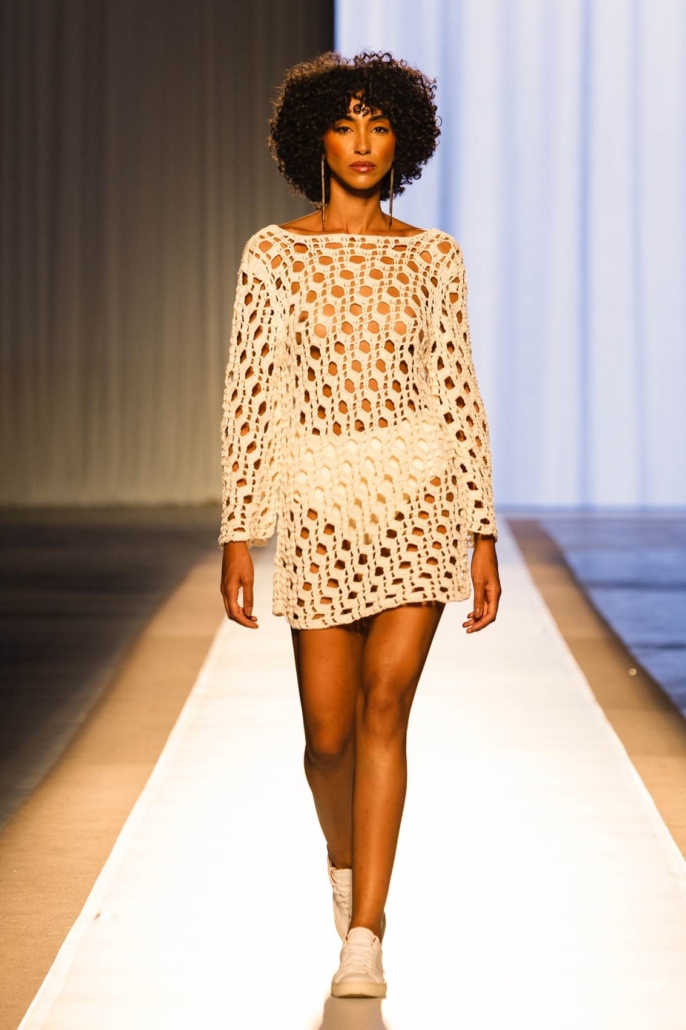
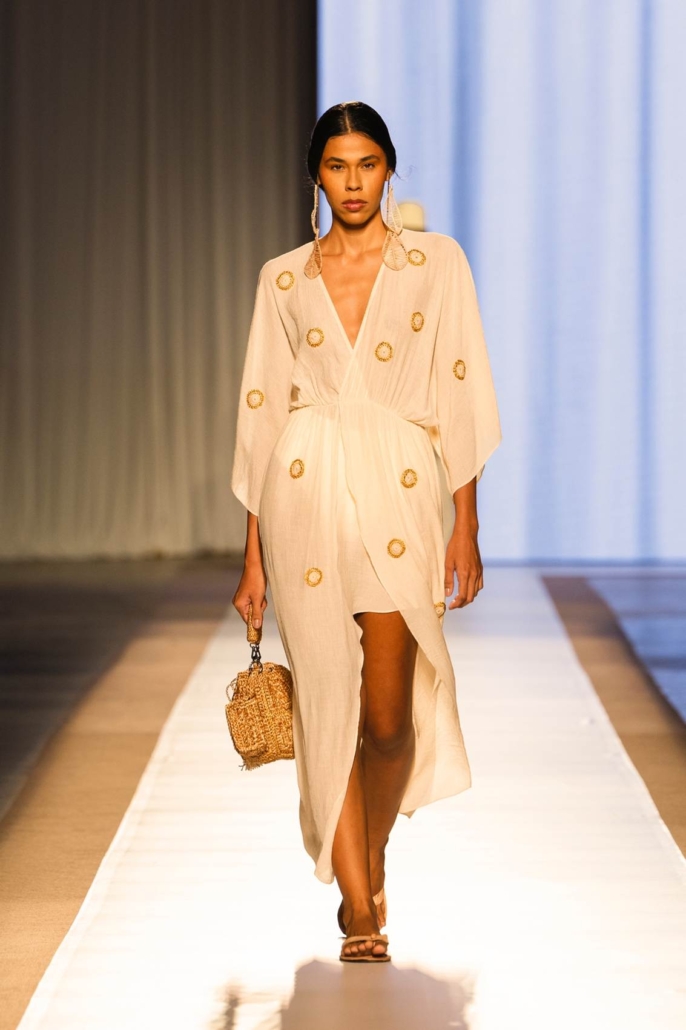
A fashion show is the highlight of a fashion brand — the moment of the show. It’s a complex challenge because you have to tell a story on the runway — a story that, in our case, includes key characters like artisans, rich craft typologies, intangible cultural heritage, and more. But it’s incredibly rewarding. From styling to staging, the look selection, makeup, line-up, and models — I personally love it and feel more comfortable each year developing this type of narrative.
I’d say Catarina Mina now loves the runway. This year, we were at Latin America’s largest independent fashion event, held in our hometown, Fortaleza. But we’ve also walked at São Paulo Fashion Week and Milan Fashion Week.
Where does the brand usually present its collections?
Today, we have showrooms abroad, including one that serves the U.S. and connects with others in Spain and Greece. We also show at trade fairs and fashion shows, of course.
Tell us a bit about the brand’s trajectory — how was it conceived and how long did it take to become established?
The brand was conceived between 2005 and 2006, and in those early days, we made fabric bags — it was a more experimental phase. Starting small and artisanal, with limited editions, was fundamental for me to gradually understand the market. Early on, we received many wholesale orders in a private label format, and I learned how to work with well-known national brands — many of which exported. That was a major learning experience.
Between 2008 and 2013, we worked with crochet and started building groups of artisans, associations, and new market relationships — learning by doing. It was a beautiful process. At that time, I was pursuing a master’s in Communication at the Federal University of Ceará, researching collective modes of production. That helped shape my understanding that the kind of fashion I wanted to make was different from what I saw around me.
In the beginning, the brand was more of a collaborative project — more collective than most companies I knew.
It wasn’t until 2014 that I decided to fully embrace retail and build Catarina Mina into what the world sees today: a premium, handmade, Brazilian brand focused on quality and impact.
How many stores and points of sale does the brand currently have?
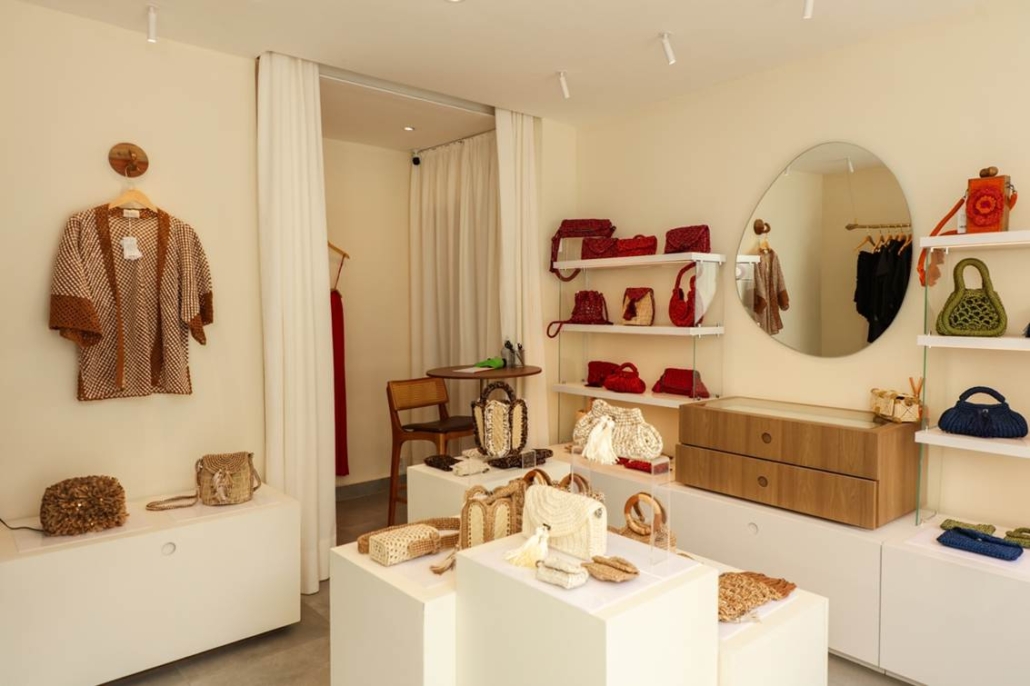
We have three own stores in Brazil: two in São Paulo (in Pinheiros and JK Iguatemi) and one in Fortaleza, which is also home to part of our studio. Our e-commerce is also a strong point of sale — with a specific audience that allows us to reach every corner of Brazil and beyond. We also operate a global e-shop.
What kind of audience connects with the brand in Brazil? Do you notice any differences abroad?
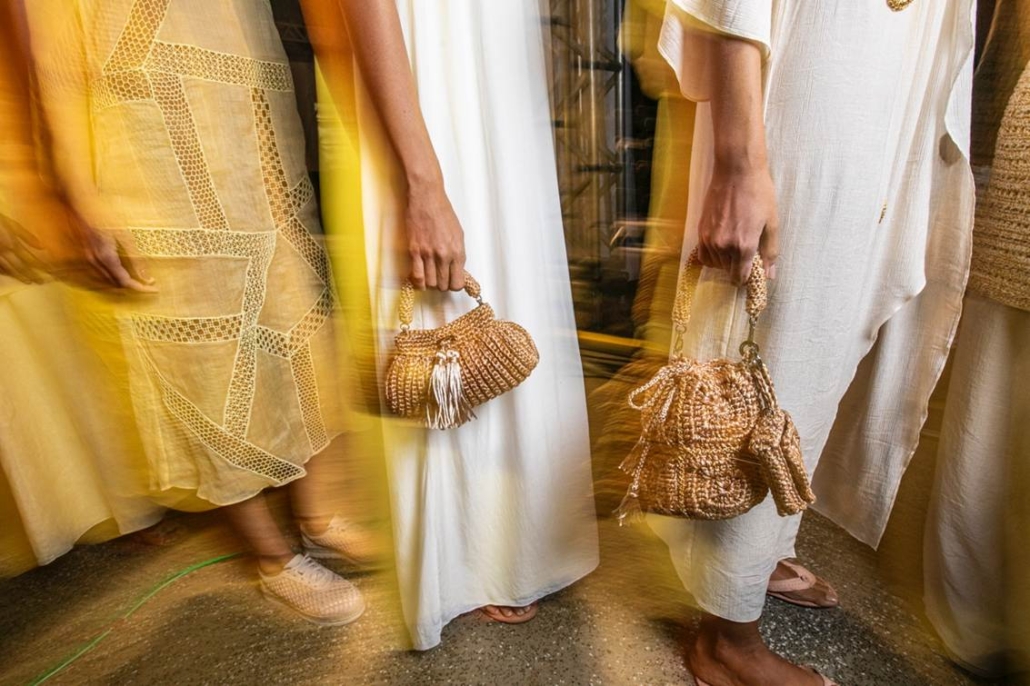
I don’t see a big difference between our Brazilian and international audiences. They are diverse, but what unites them is that they are mostly women who value or enjoy carrying something handmade. They like the language, the texture — they find beauty and uniqueness in the handmade. That makes me happy — knowing we reach an audience that understands our essence and, most importantly, loves that essence.
Do you plan to expand internationally? Can you tell us more?
Our international journey has mirrored our national one — gradual and intentional. We’ve taken steps, secured retail partnerships — especially in Europe — and now we dream of opening a physical store in a European capital that welcomes tourists from all over the world, has strong foot traffic, and recognizes Catarina Mina as a Brazilian brand without borders.
Can anyone guess which capital that is? I can’t say yet! (laughs)
What sustainability practices do you follow? Is it challenging? Do you plan to expand them?
No doubt it’s challenging — because it requires investment, and all investment is demanding. But here, we always say that we don’t choose between profit and impact — we want both, and we’re committed to both.
In the last two years, we’ve been organizing data within the company to formally document everything we’ve done since 2014 in terms of community impact, environmental efforts, and work with minorities.
We created an Impact Department, now made up of a dedicated team that spends all its time focused on social impact.
Between 2023 and 2025, we were fully focused on obtaining the B Corp Certification, something we deeply wanted.
We achieved it, and with it came the responsibility to keep growing in that direction — so yes, we absolutely plan to expand these practices.
What raw materials do you typically work with? How would you describe your design process?
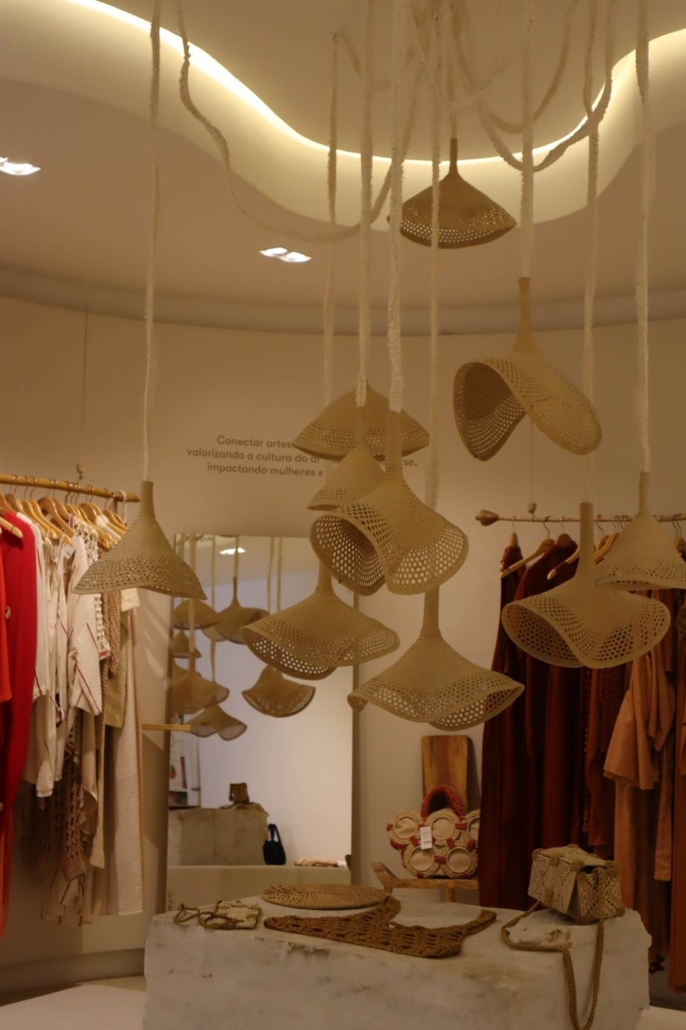
We always prioritize natural and Brazilian raw materials to fulfill our sustainability mission. That includes pure cotton, organic cotton from Paraíba, silk straw from southern Brazil, Amazon rubber, and natural fibers like carnauba, banana plant, croá, pure linen, ramie, and Brazilian metals.
It’s a creative blend of solutions in a world that must now deal with overproduction, massive fast-fashion scales, resource scarcity, and social inequality. It’s a big challenge — but yes, we have a clear purpose and are always working to align with it.
What’s the brand’s best-selling product?
I have to mention two:
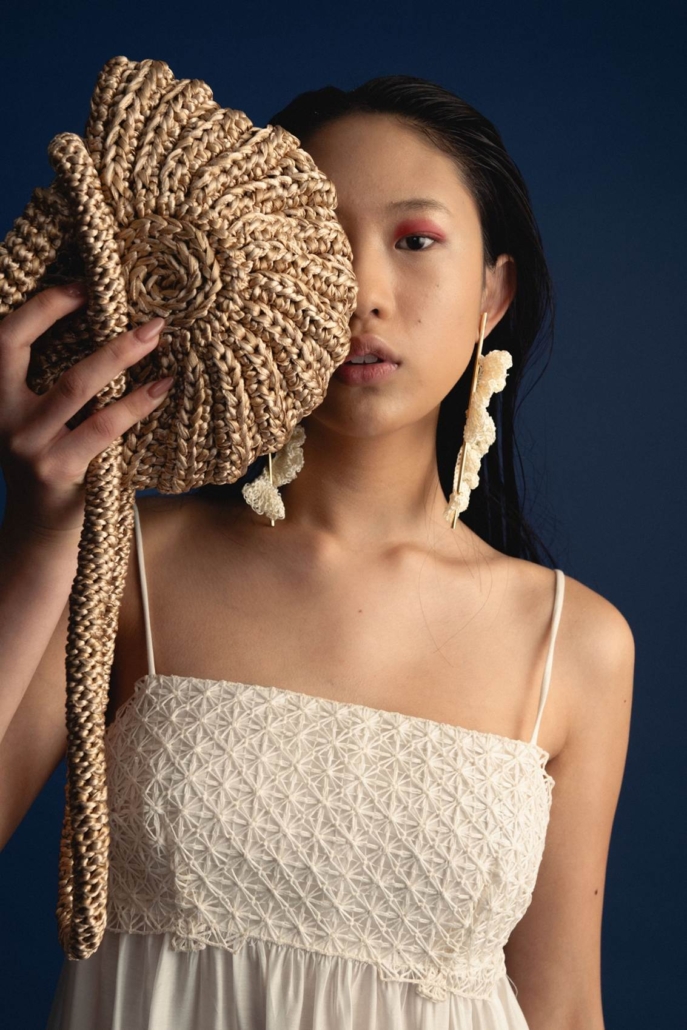
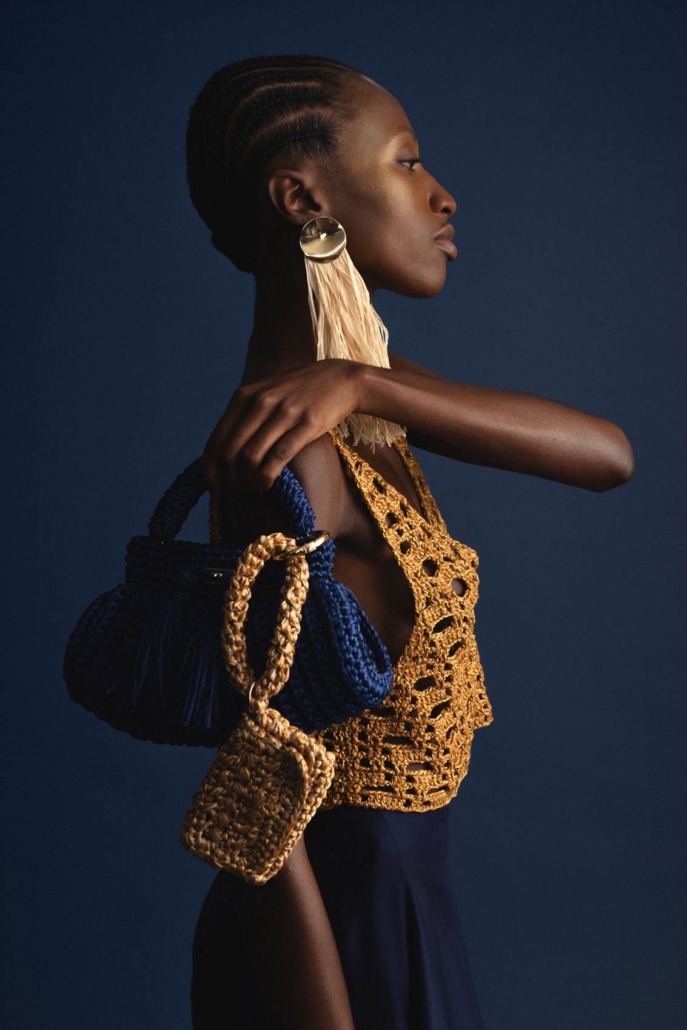
The Cantiga — it’s the first bag many clients buy from Catarina Mina, and it’s been made since 2011. For me, that’s incredibly valuable — a bag that transcends collections and lasts over time, in a market that thrives on disposability. It’s definitely a best-seller.
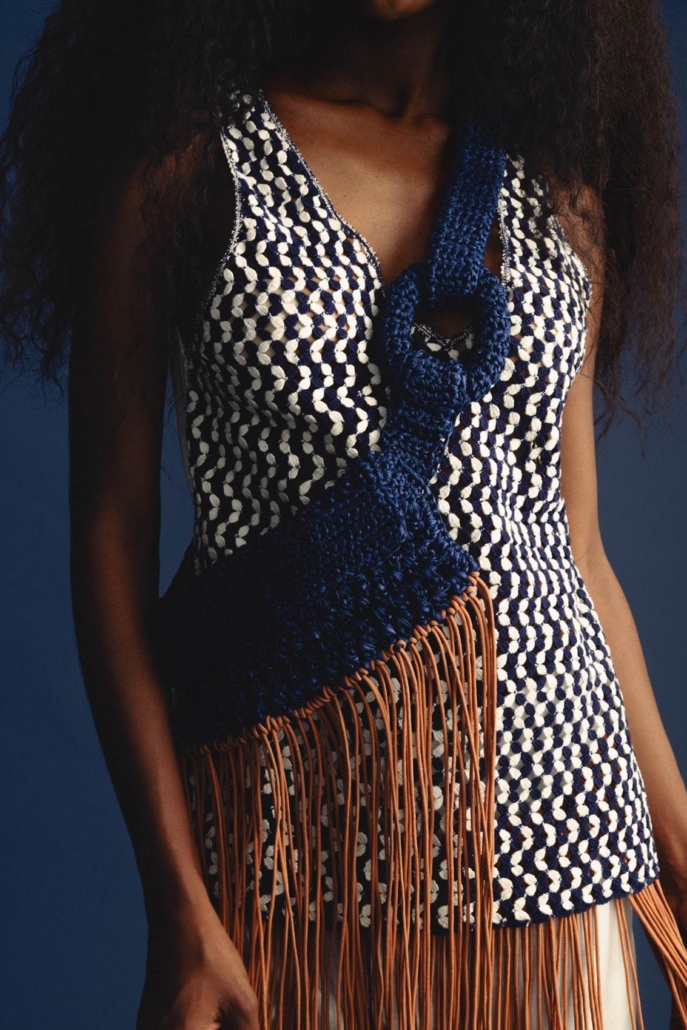
But recently, a tiny and super charming (and youthful) bag has surpassed it: the Pouch Cafuné — a crossbody belt bag that most people wear across the chest. It’s casual, youthful, simple, with fewer details but brilliant design.
I think Catarina Mina can have both sides: a more sophisticated one, with metals, adaptable straps, and sturdiness — and a lighter, more practical, minimalist one. There’s fashion for every taste — as long as it’s handmade.
By Juliana Lopes writer of fashion label Brazilg
@j.u.lopes



Leave a Reply
Want to join the discussion?Feel free to contribute!